
Faculty Profile
Many Happy Returns
By the time Sequoyah’s high school opened in 2016, Chelsea Confalone had been immersed in its curriculum for a long time.
“When Marc Alongi reached out to see if I was interested in helping develop the science curriculum and pitched me his vision for the school, I was sold,” she says. “We spent the following year working it out, connecting it to other disciplines, and talking about the vision for the school in general. It was one of the most fun things I’ve ever done.”
Biology at the beginning was scrappy; Chelsea’s class shared a room with visual arts, leading to paint spilled on microscope slides and fruit flies from genetics experiments getting stuck to modeling clay. Since many of the first group of students transferred from other schools, they all had a wide range of interests, abilities, and expectations—but also a desire to come together.
“In the beginning, we all tried to do too much,” Confalone says. “It’s been great to watch as programs have become more honed, as more support staff have been added so teachers can focus on creating engaging learning experiences and collaborating on projects with each other.”
After teaching remotely from Maine during the beginnings of COVID, Chelsea took a year off to balance herself, spend time with family, and work on projects that piqued her interest. Those projects grew in scope until one year became a few—including an incredible history project tied to the Mount Desert Street Cemetery in Bar Harbor.
“I was curious to learn more about who was buried there,” she says. “I worked with two local historical societies to make a curriculum local schools could use and partnered with the local library and a bookstore to make a website for the public.”
She also immersed herself in local politics, helping East Coast candidates before moving back to California. Her skills with artificial intelligence gave small campaigns the ability to compete against larger, better-funded opponents.
“Campaigns don’t typically have the money for fancy tools,” she says. “I built things staff wished existed but didn’t have the time or budget for, like a searchable database of every speech or podcast done so the communications team could find exactly what was said, or a community outreach tool to build mutual aid networks across the state.
“Activism isn’t a chore. When you are contributing to something bigger than yourself, being humble and offering your services, it can feel incredibly rewarding and will make you much happier than doom scrolling.”
Meanwhile, her day job is equally rewarding. “It’s so great to be back,” Chelsea says. “Sequoyah was always in the back of my mind as the kind of place uniquely positioned to get it right. The competency-based framework we use is exactly what we need to navigate this new landscape. That teachers here already think in this way means we can be a model for how to get it right, and I’m thrilled to get to be part of that work.”
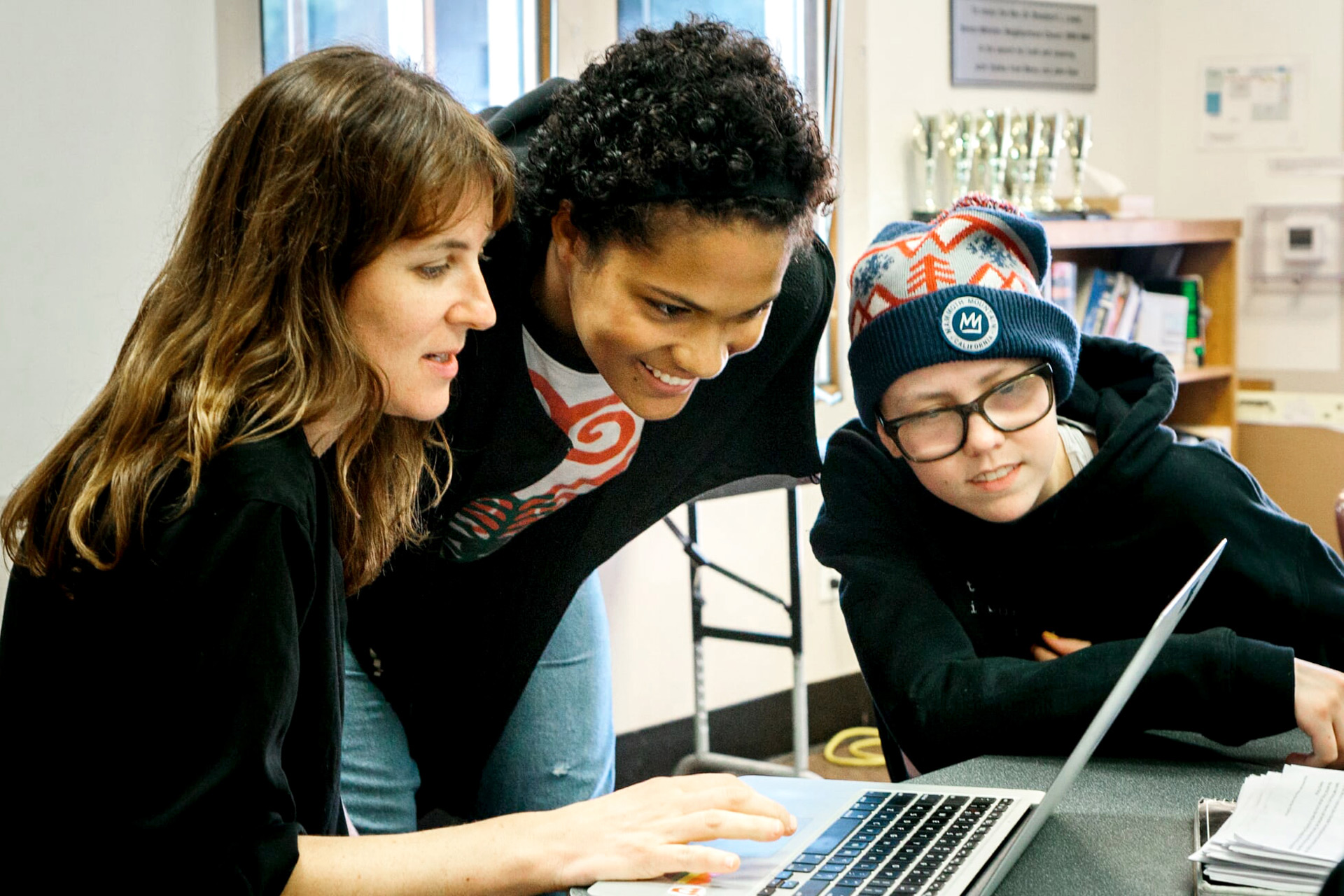
Above: Chelsea with students in 2026 (top) and 2019.