
Alum Profile
Get Back
Five years after graduating, Julian Suh-Toma ‘21 has returned home to Sequoyah. He sits in the high school’s faculty lounge, marveling at the room’s warm light and sense of space. He has just accepted a seat on the school’s Board of Trustees, becoming the first alum of the high school to do so.
“It sparks a lot of reflection and introspection for me,” he tells RJ Sakai ‘04, a graduate of the K-8 campus, current Director of DEIJ and Community Engagement, and Julian’s longtime conversation partner. “What type of person was I when I was here? What type of person am I now? What values did I hold closely when I was here? Do I still hold those values now?”
He has been asking himself such questions since 2021. They shaped his conversation with Sakai and help explain why a 22-year-old headed toward law school has chosen to spend part of his summer thinking carefully about a small high school in Pasadena.
A Freshman Who Fell in Love with Problems
Julian arrived at Sequoyah almost by accident. His parents, both career public servants, steered him toward the school because of its mission and commitment to social equity. He recalls his admissions tour with more embarrassment than pride, pressing his guide more about lunch options and sports teams than course offerings. Sequoyah won him over nonetheless, and the change it produced has shaped his adult life.
He credits ninth-grade physics instructor Laura Haney with setting that change in motion. She would begin class by writing a question on the board and waiting; eight students on stools worked through it together, testing what they knew and identifying what they did not.
“I think it was at Sequoyah,” Julian says, “where I learned to fall in love with the problem and not necessarily the solution.”
A self-described type-A personality, Sequoyah helped Julian pace himself, teaching him not just to reach an answer and move on, but to also remain in uncertainty and regard gaps in understanding as the real subject of study. He traces that habit through his ninth- and tenth-grade Social Innovation Program project work on minimum wage policy; through Talking Leaves seminars, where Plato’s Republic invited genuine inquiry rather than a search for the right interpretation; and through historical simulations on Indian independence and the trial of Socrates, which asked students to inhabit a role fully instead of studying it from a distance.
Community matters as much as curriculum. Julian recalls pickup basketball and spikeball during break, the daily jog to the Rose Bowl Aquatic Center for flag football practice, and the comfort of being known by upperclassmen as a freshman. Sequoyah’s small size allowed students to be recognized across grade levels. That recognition created the belonging he now considers central to his sense of self.
During his two years as student co-chair, Julian helped guide the school through the isolation of the COVID-19 pandemic. The experience taught him a lesson about leadership he still carries with him: results matter less than the buy-in that makes them durable. “Leadership as a practice of facilitation and community building,” Sakai offers, and Julian agrees. He learned to accept feedback from friends serving alongside him in student government, a skill that has served him in every room he has entered since.
Carrying Sequoyah to New Haven and Beyond
That grounding followed Julian to Yale, where he built a sociology degree and coursework in Grand Strategy around a persistent interest in how people make decisions and extend concern beyond their immediate circles. He spent three years on the Yale College Council and was elected student body president. The work echoed his Sequoyah student-government years and sharpened his instinct for consensus-building at a larger scale. He also found similar purpose in the Yale Policy Institute and the Asian American Students Alliance.
His legal-service placements with the Coalition to Abolish Slavery and Trafficking and the Legal Aid Foundation of Los Angeles pointed Julian toward a career in advocacy for people with limited access to power. His research on decision-making and cosmopolitanism gave that drive an intellectual home.
Julian describes his post-graduation Coro Fellowship—a nine-month rotation through nonprofit, business, government, and labor placements in Los Angeles—as a direct extension of his Sequoyah education. “It felt like being thrown back into the kind of problem-centric environment of Sequoyah,” he says joyfully of the dense memos, interview schedules, and deliberate lack of instructions provided by the organization.
Now studying for the LSAT with an eye on law school, Julian carries forward the conviction that understanding a problem fully comes before proposing a solution.
A Trustee’s Task: Listening for the Next Generation
Julian sees his new role as a trustee as a way to represent the perspective of a recent graduate who still remembers what the school feels like day to day. He wants conversations with current students to shape what he brings to board meetings, giving a current voice to decisions that will outlast his own time on campus.
He speaks about his appointment with visible gratitude, calling it “a tremendous sense of pride.” The invitation has led him to trace a line from the prospective student who asked about cafeteria food and scoreboards to the young advocate-in-training preparing to serve the institution that changed him.
His message to fellow alums is simple: “Come back. What do you have to lose?”
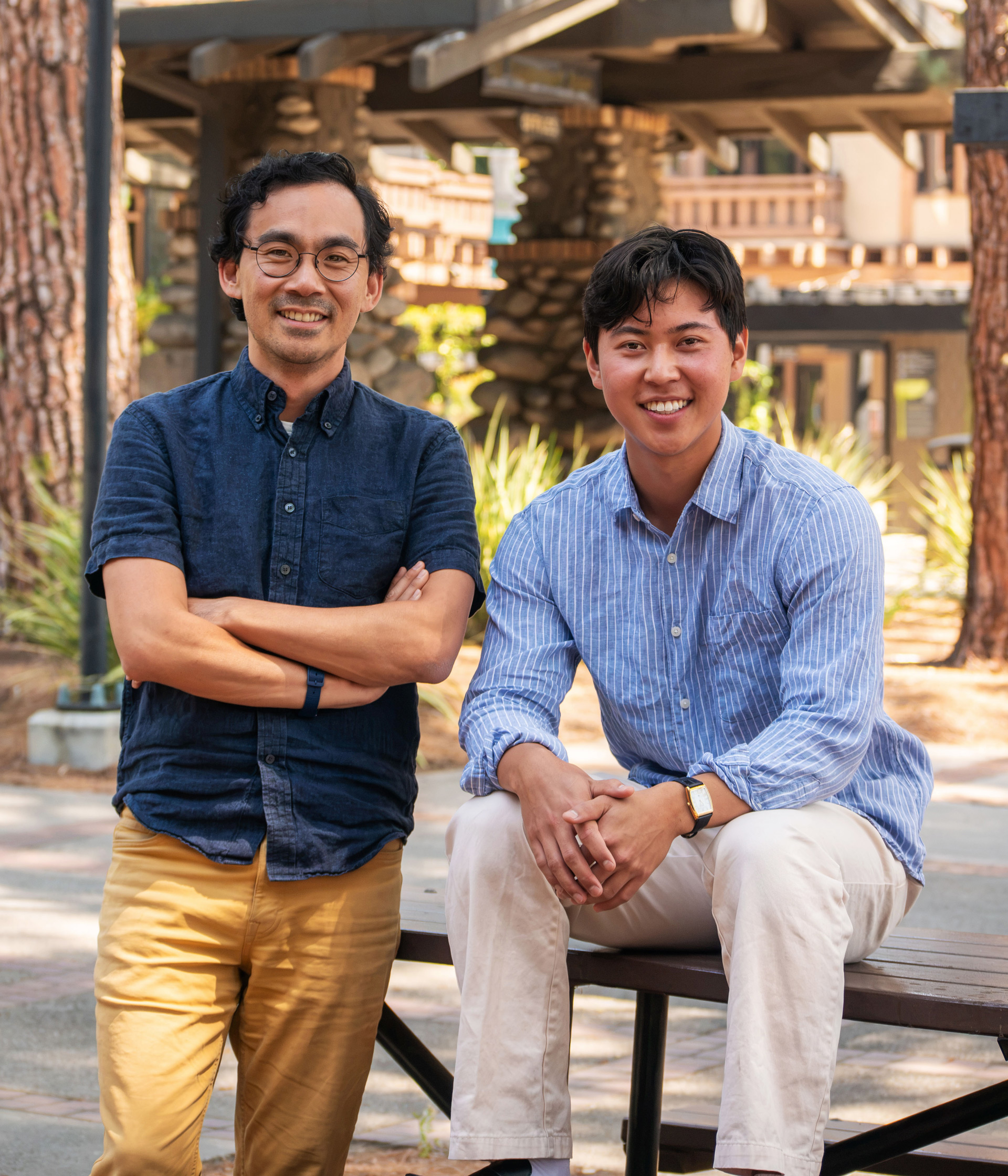
Above (l-r): Director of DEIJ and Community Engagement RJ Sakai and Julian Suh-Toma ‘21 at Sequoyah’s high school campus.